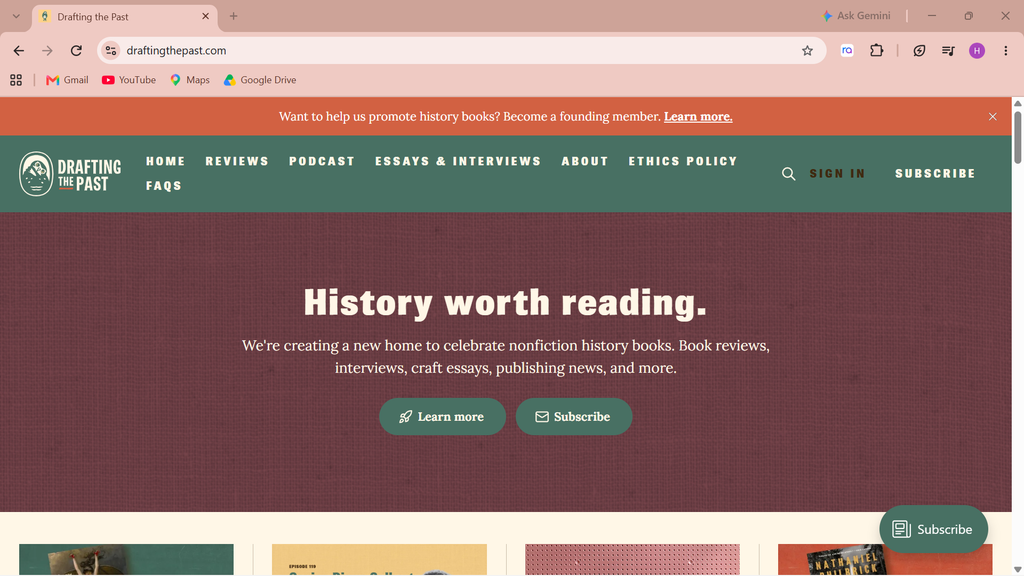
As opportunities for in-depth book reviews become increasingly limited, Drafting the Past offers a valuable platform for readers, writers, and scholars interested in historical nonfiction. Founded by historians Megan Kate Nelson and Kate Carpenter, the website grew out of a podcast launched in 2022 and has since expanded into a multi-platform publication featuring a website, newsletter, and podcast. With a mission to help readers discover compelling history books and inspire historians to become better writers, Drafting the Past emphasizes the importance of engaging, thoughtful, and accessible historical writing. By creating a space for meaningful discussion and critical engagement with both new releases and classic works, the website seeks to strengthen the relationship between historians and their audiences.
Book Reviews
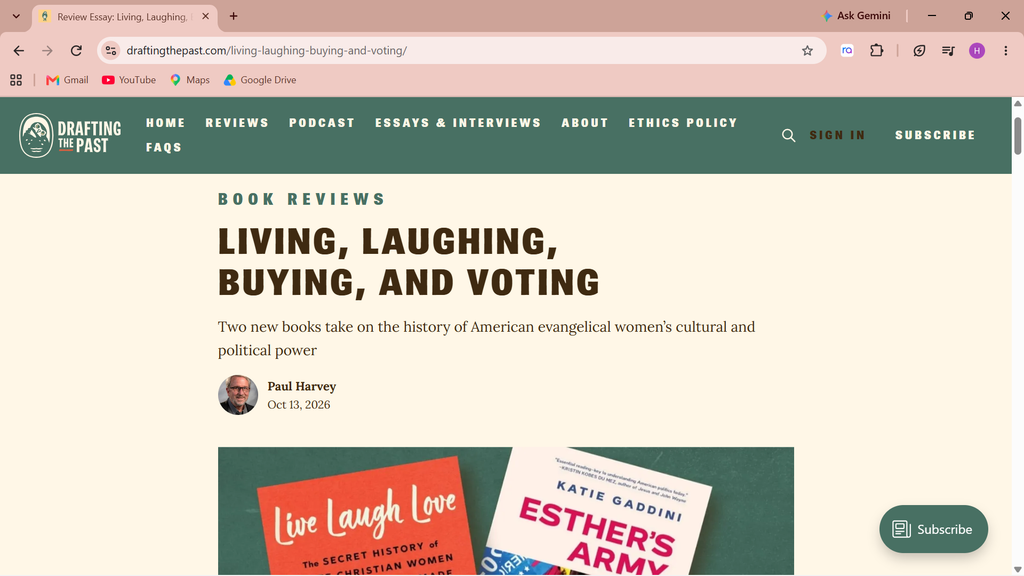
The book reviews section is a recently added feature that offers readers critical evaluations of historical nonfiction. The first review was published on October 13, 2026, and as of October 25, 2026, the page contains four posts. Each review is written by a different historian, providing readers with a variety of perspectives on historical works. In addition to evaluating the books’ arguments, use of historical evidence, and storytelling techniques, the reviews also let readers learn more about the contributors by clicking the authors’ names, which link to individual biography pages. This feature not only helps readers discover new history books, but also connects them with historians and their expertise.
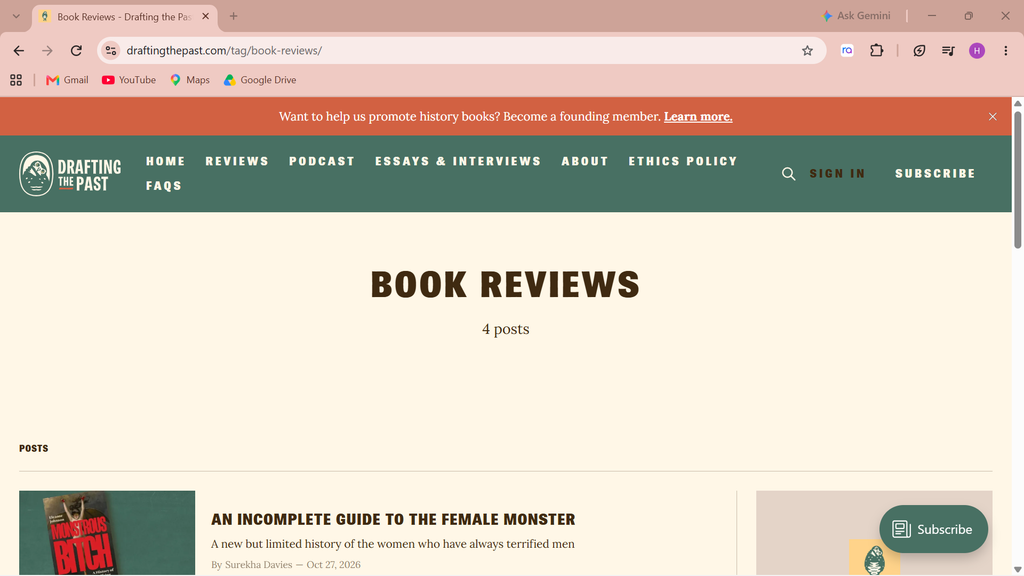
Although the book reviews section is still relatively small, its inclusion adds another dimension to the website by offering readers critical evaluations rather than relying solely on interviews and writing advice. Reviews written by different historians also introduce a range of perspectives and areas of expertise. As the section grows, it could become a more substantial resource for readers seeking recommendations and thoughtful criticism of historical works.
Podcast Episodes
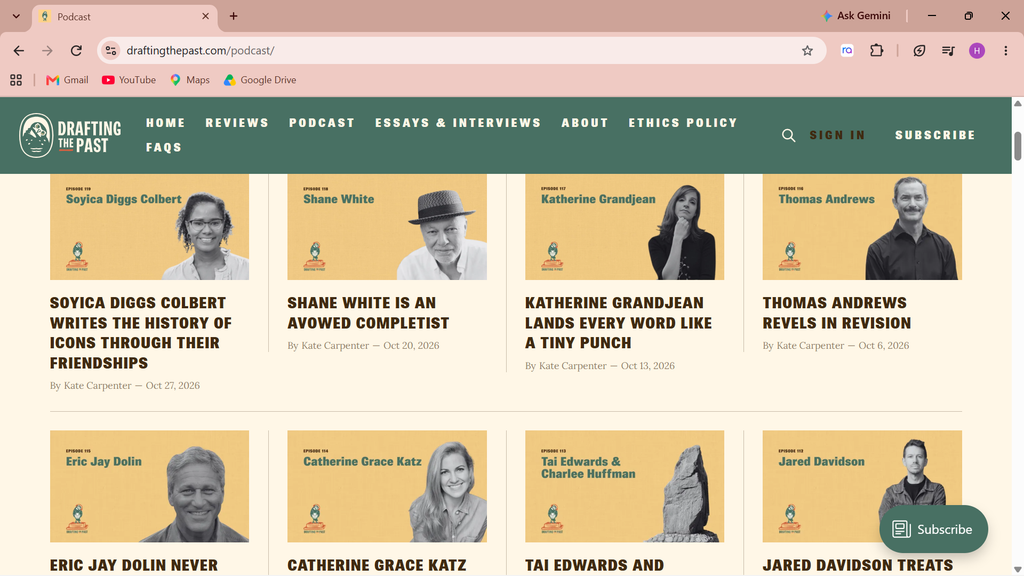
The Podcast section of Drafting the Past is a central feature of the website, offering interviews with historians about their research processes and approaches to writing history. Hosted by Kate Carpenter, the podcast features a wide range of historians who discuss topics such as developing historical narratives, working with archival sources, and making history accessible to readers. The website lets users search for specific posts, tags, and authors, making it easier to find particular podcast episodes and review essays. Each episode has its own title organized by publication date, allowing users to browse recent episodes or explore the extensive archives. The website also provides links to listen on other podcast platforms, such as Spotify, Apple Podcasts, Pocket Casts, YouTube, Amazon Podcasts, and Pandora. Thus making the content accessible to a wider audience.
Once users select an episode, they are directed to a separate page with information about the historians interviewed, references to the literature discussed during the episode, and a full transcript. These features make the content accessible to readers who prefer reading to listening and let users explore the historical works mentioned in each discussion. By focusing on historians’ experiences and techniques, the podcast highlights the challenges of historical research and writing while supporting the website’s broader goal of encouraging engaging, effective historical storytelling.
Rhae Lynn Barnes – Darkology: Blackface and the American Way of Entertainment
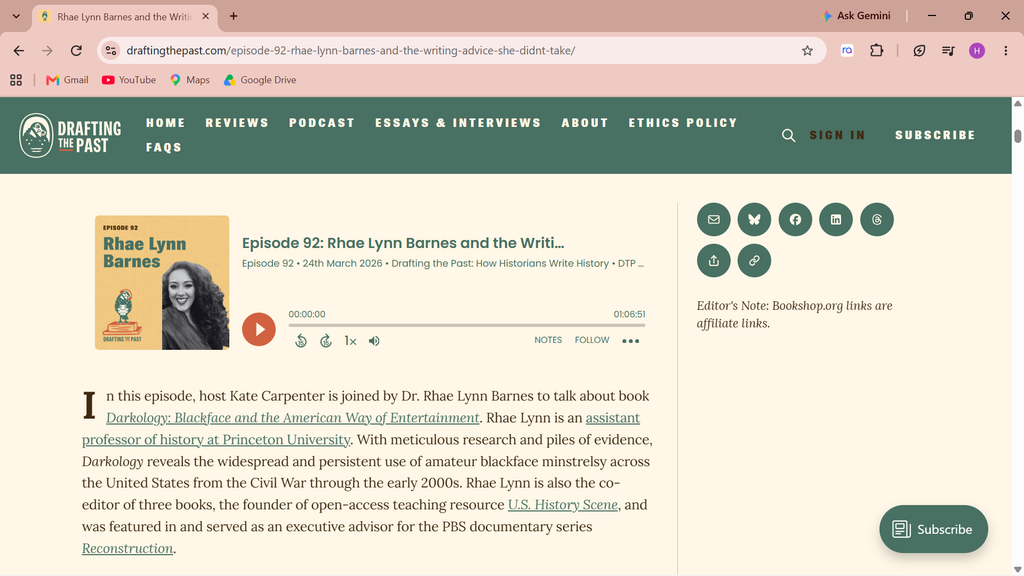
In Episode 92, “Rhae Lynn Barnes and the Writing Advice She Didn’t Take” shows how podcasts make historical scholarship more personal and engaging. In this episode, Carpenter interviews historian Rhae Lynn Barnes about her book Darkology: Blackface and the American Way of Entertainment, discussing the extensive research behind the project, the challenges of writing about difficult subject matter, and the decisions involved in shaping a historical narrative. In the podcast episode, Barnes mentions her academic background in creative writing, poetry, and storytelling and how it shaped her approach to historical research. She explains that after a photograph from Virginia Governor Ralph Northam’s medical school yearbook showing blackface circulated widely on social media in 2019, she wrote for The Washington Post to provide historical context about the history of blackface in America.
In the episode, Barnes also recounts her encounter with censorship while researching minstrel shows. At the Library of Congress, a librarian revealed that she had hidden materials related to blackface minstrelsy in 1987 out of fear that the Ku Klux Klan would use them to promote racist ideologies. The librarian eventually gave Barnes the materials after learning she intended to use them for historical research. Barnes also visited the Benevolent and Protective Order of the Elks, but the archives were members-only. While police escorted her out, the order gave her the nickname Erin Brockovich of blackface. These stories make the podcast engaging because listeners are not simply learning about the history of blackface, but following Barnes through the process of uncovering it. Her experiences show that historical research involves more than locating documents; it also requires navigating institutional restrictions and confronting uncomfortable aspects of the past. Unlike a traditional history book or academic article, the podcast allows listeners to hear these experiences directly from Barnes, including the frustrations and unexpected discoveries that may not appear in a finished publication. By sharing the stories behind her research, Drifting the Past makes historical scholarship more approachable while showing the persistence and creative thinking that go into producing compelling historical research.
Craft Essays
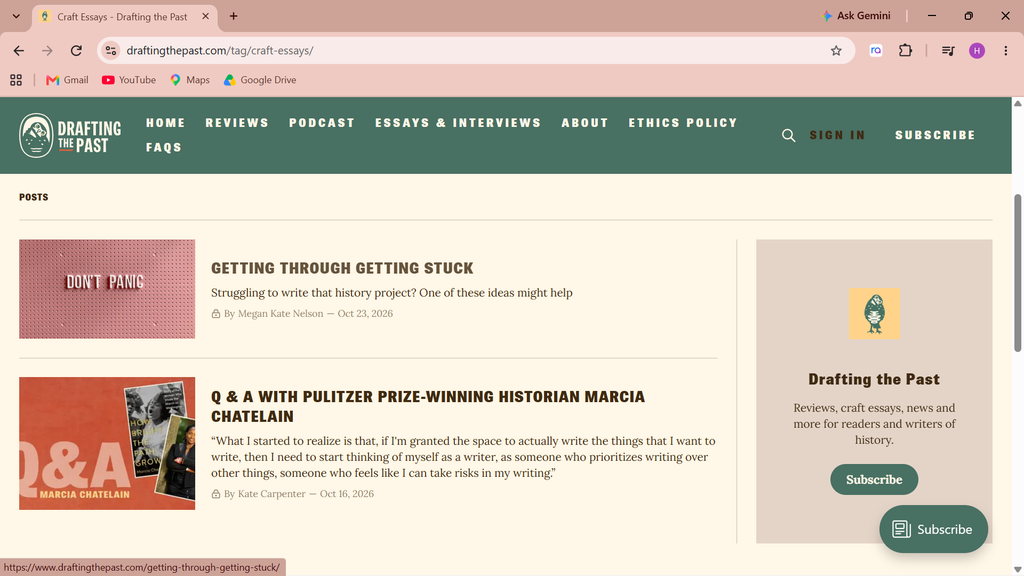
The craft essays page of Drafting the Past focuses on the techniques, challenges, and creative processes involved in writing history. Unlike the book reviews, which evaluate published works, these essays offer practical advice and insight to help historians strengthen their writing. The page includes articles such as Megan Kate Nelson’s “Getting Through Getting Stuck” and Kate Carpenter’s Q&A with historian Marcia Chatelain. However, access to this section is restricted by a paywall, meaning readers must join the website’s Founders Membership Program to read the essays. Although the membership requirements limit access for casual visitors, the craft essays provide additional information about historical writing that complements the information discussed in the podcast episodes.